
Listening to Melba…
Part Two of Two
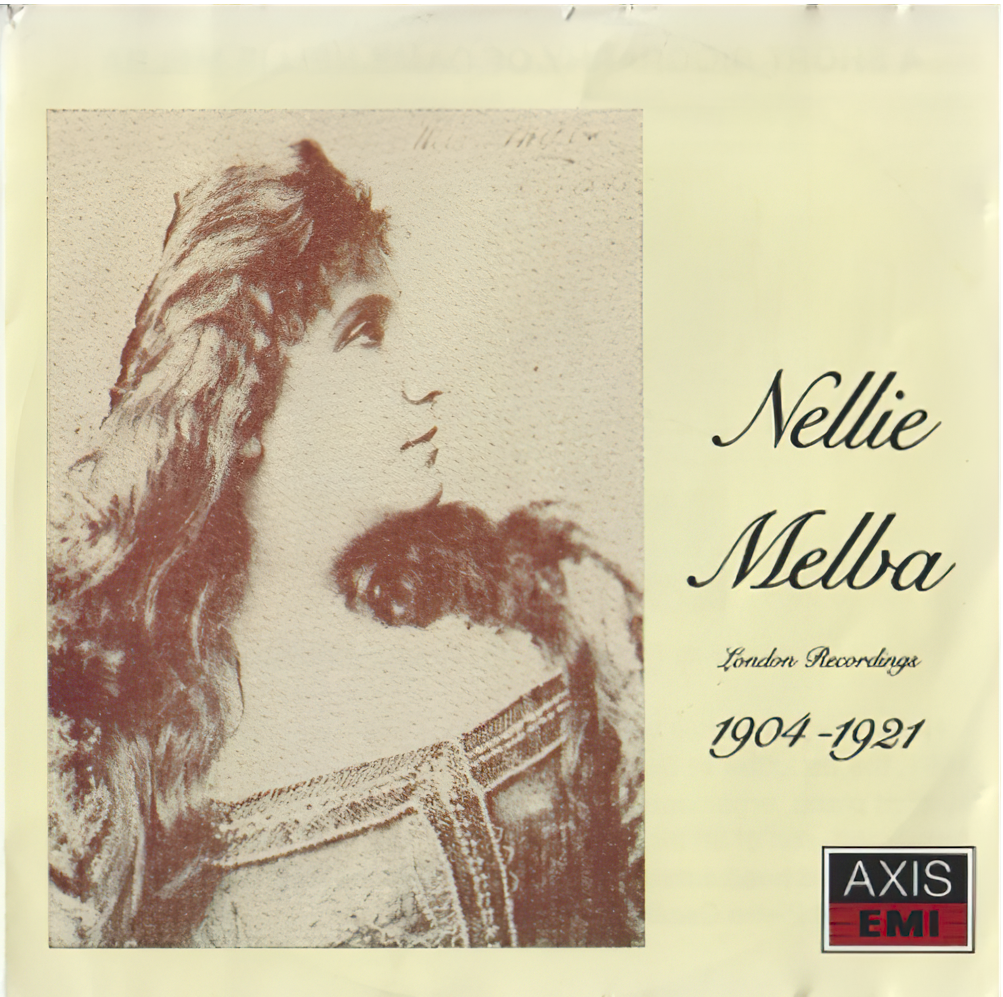
There have been dozens of releases of common and occasionally rare Melba material. Over the years EMI produced multiple 78 shellac sets of Melba’s singing and these were followed by compilation on vinyl and then in 1992, this EMI Axis CD.
Most people who were born after WW2 might have learned to recognize Melba’s voice from their parents (and grandparents… and possibly their great-grandparents!) shellac 78s. If they were interested (captivated) they went on to buy long playing vinyl transfers. These recordings, remastered by EMI from 78 rpm shellac discs, had been issued on vinyl long playing discs earlier. The Axis CD was published in 1992. It includes 23 tracks, and positions Melba’s ‘usual’ final offering at concerts as its last item, ‘Home Sweet Home’.
DISC FIVE (Naxos)
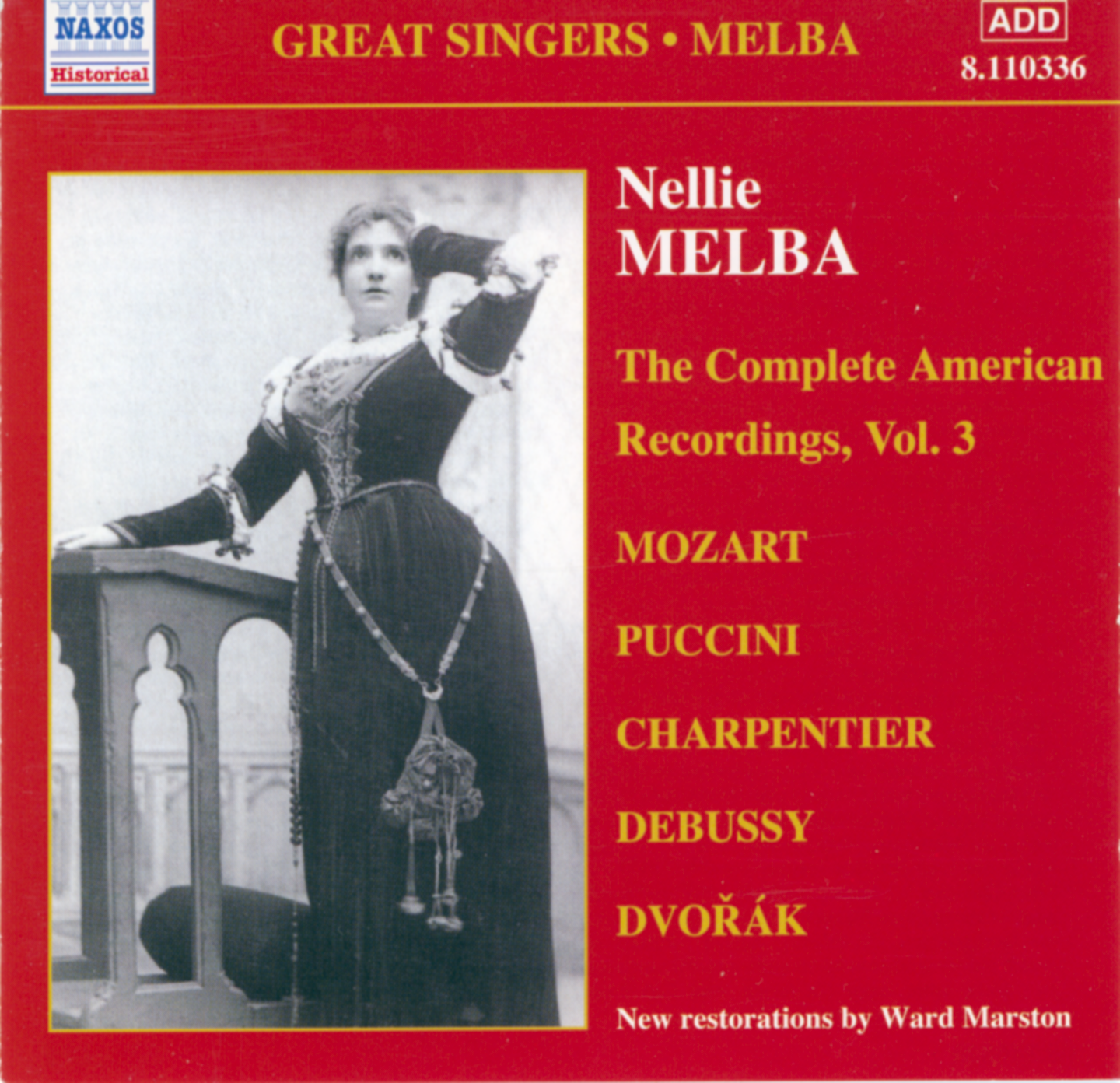
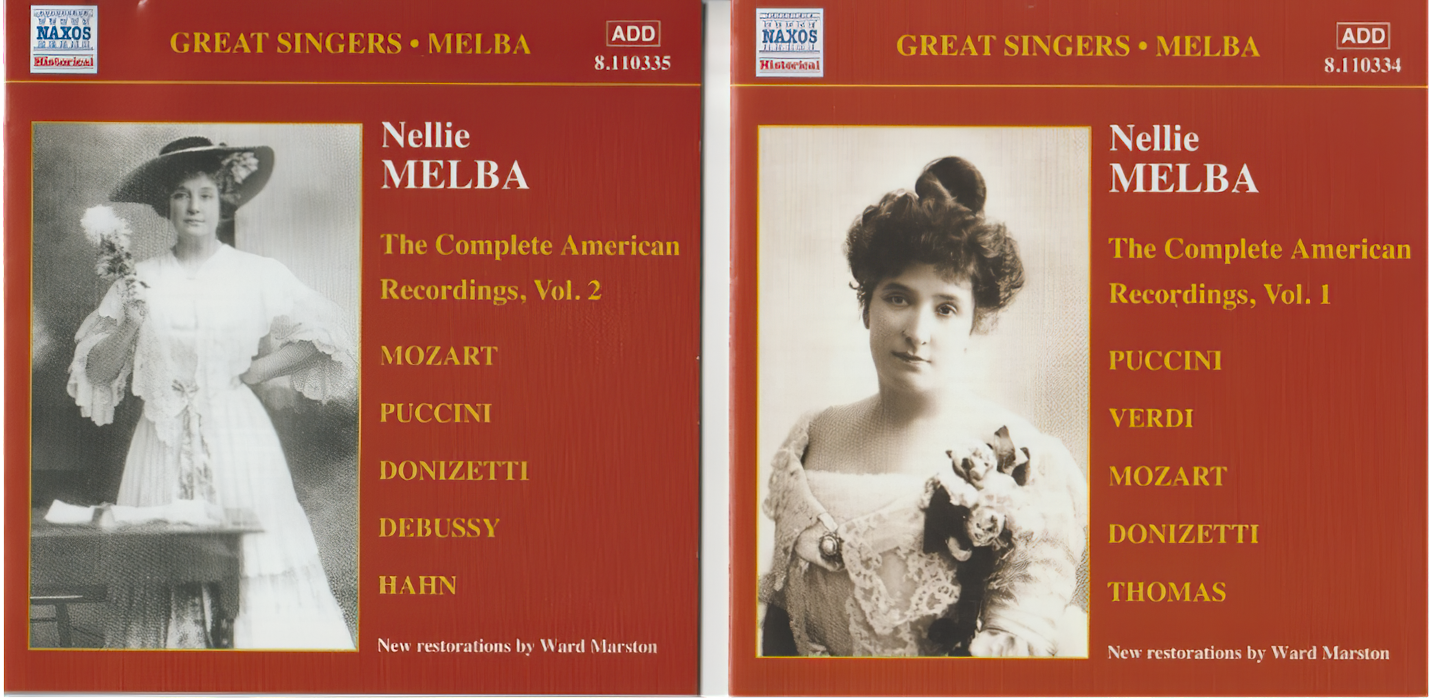
The NAXOS company, aiming for a complete edition of Melba’s known recordings, divides its transfers according to their North American or European origin. Often, she made several recordings of items that formed a substantial part of her opera and concert repertoire. These excellent audio-restorations and re-mastering by NAXOS are the work of Ward Marston.
Marston is also credited as the producer of several other Melba recordings, producing excellent results between 2002 and 2005.
This aria was, as we have seen, recorded as a part of the programme at Covent Garden on 8 June 1926. (Audio 2, above) That recording catches something of the magical quality of Melba’s lower register and her easy access to a wide range of expertly pitched notes.
While it is interesting make that comparison of this American acoustic recording from 1910 (Audio 6, above) with the one made with a microphone twenty-six years later at Covent Garden, (Audio 2, above), there are others on Naxos, should you wish to make a further comparison.
This version was recorded in the USA in 1909 and is accessible of the Naxos website. https://www.naxos.com/CatalogueDetail/?id=8.110336
The improvement in the sound quality is clear enough, in the 1926 recording, but something of the depth and resonance of the chest tones had diminished, perhaps. The sudden cut at the end is evidence of the pioneering ‘outside broadcasting’ developing for radio and applied to documentary sound recording.
DISC SIX (Historic Masters. Two Tracks):
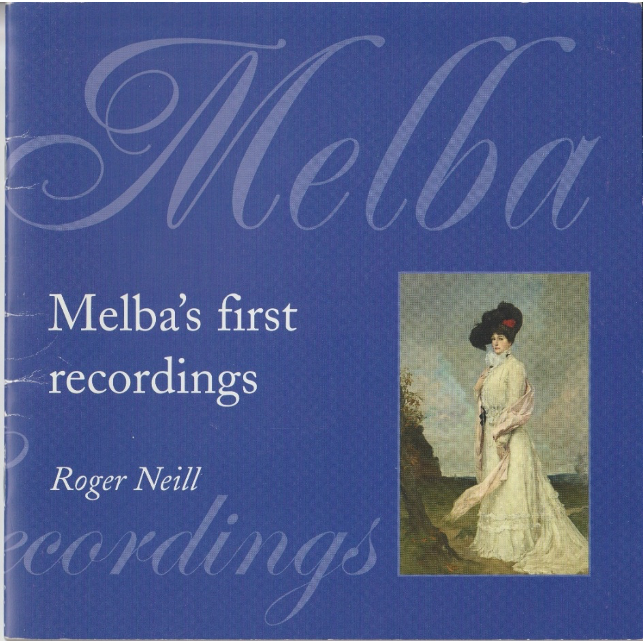
In 2008 a European company called Historic Masters published transfers taken from then recently discovered ‘metal mothers (masters)’ of Melba’s 1904 discs and other later Melba material archived at EMI in Hanover, Germany.
DISC SIX (Historic Masters. Two Tracks):
In 2008 a European company called Historic Masters published transfers taken from then recently discovered ‘metal mothers (masters)’ of Melba’s 1904 discs and other later Melba material archived at EMI in Hanover, Germany.
The disc and the accompanying notes are the work of Roger Neill, a longstanding friend of the NFSA, who has conducted research on Australian singers for scores of years. Once more, this is one of Mimi’s arias from La Bohéme, the Puccini opera that became standard repertoire for Melba. It is also the third of at least six performances of the aria Melba committed to cylinder or disc. At her 1926 Covent Garden Farewell Concert Melba sang Act 2 of Romeo and Juliet, Act IV of Verdi’s Otello and Act 111 and IV of the work she had made her own, La Bohéme. The recording apparatus was housed in a truck outside the Royal Opera House and had minimal contact with the activity on the Covent Garden stage. As a result, there is occasional awkwardness about the start and finish of recordings. Romeo and Juliet was not recorded as the tenor (Romeo) was contracted to another recording company at the time. Our loss! However, we are able to compare the 1904 London recording with other American and European performances.
Melba recorded the aria Donde lieta usci in the following years: 1901 (USA), 1904 (UK) (twice, one unpublished), 1907 (USA) 1910 (USA), 1926 (UK). The date range of these recordings provides an excellent opportunity to listen for changes in her voice.
I have asked Roger Neill for an indulgence. The last track, recorded in London 17 December 1926, is the last recording Melba made. The popular African-American spiritual has retained its popularity since it first appeared in the 19thcentury. At 65 Melba’s voice is in remarkably fine fettle. It is sometimes argued that training by Mathilde Marchesi helped Melba to preserve the instrument she was gifted.
This performance is taken from one of those metal masters discovered in Hanover in the early 2020s. It is an exceptionally clear and clean sounding record. In a real sense, probably the best recorded Melba sounds.
Melba’s last commercial recording, Swing Low, Sweet Chariot, then, was made in London 17 December 1926. The item can also be found on the Eklipse disc (Track 20…though the track list lists only 18 items.) Clearly the producers of the Eklipse CD, commencing with some of the earliest of Melba’s cylinder recordings, liked the symmetry of concluding with Melba’s final recording.
The NFSA OWLS wish to thank Roger Neill and Historic Masters for permission to extract Swing Low from their 2008 disc. Roger’s excellent booklet, Melba’s First Recordings is a useful source of information regarding the making of the transfers and the original recordings and much else.
And finally, Roger Neill also provided guidance for an important set of 4 compact discs of many of the ‘greats’ of Australian singing and, perhaps, one two of slightly lesser stature. Melba is given 3 tracks at the very beginning of the set. It is a treasure trove of Australian voices, and is still available to buy.
DISC SEVEN (EMI Melba and many others 4 CDs)
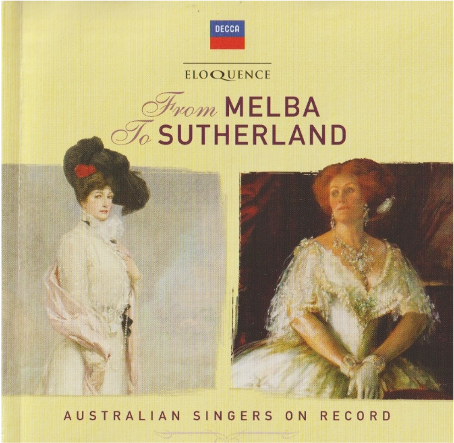
This boxed set in the Decca Eloquence series, a series produced by another friend of the NFSA, Cyrus Meher-Homji, was selected and assembled by Tont Locantro and Roger Neill. At the time of writing these notes, it is still available in the ever-diminishing number of record shops that carry ‘new’ CDs.
Select Publications
There are numerous books about Melba and the place amongst the singers of her time. These are just few of them.
Blainey, Ann, I am Melba: A biography, Black Inc, Melbourne 2008
Brownrigg, Jeff, The New Melba, Crossing Press, Sydney, 2006
Colson, Percy, Melba: an Unconventional Biography, Grayson, London 1932
Lazar, W ‘Around the Horn with Amy Castles’ in Australasian Sound Archive, Number 5, April 1988 ISSN 0818-5646, Canberra
MacKenzie, B and F, Singers of Australia, Lansdown, Melbourne, 1967
Melba, Nellie, Melodies and Memories, Thorton Butterworth, London 1925
Moran, W, (Ed.) Nellie Melba: A Contemporary Review, Greenwood, Connecticut, 1985
Murphy, Agnes G, Melba: A Biography, Doubleday Page, New York 1909
Nichols, B, Evensong, Jonathan Cape, London 1932
Radic, Therese, Melba: the Voice of Australia, Macmillan, Melbourne 1986
Vesty, Pamela, Melba: A Family Memoir, Coldstream, Victoria 2000
Wainwright, R, Nellie: the Life and Loves of Dame Nellie Melba, Allen and Unwin, Melbourne, 2021
Wechsberg, J, Red Plush and Black Velvet, Weidenfeld and Nicolson, London 1961
In addition, there are also thousands of articles and reviews, some of them gathered into William Moran’s book listed above. (For example, John Norton’s attack on Melba from 1902 is included there.) The National Library’s online access tool to newspapers and periodicals, Trove, is a good source of journalism in Australia.
Dr Jeff Brownrigg 2026